Healthcare
Beyond clean: How EVS is critical to patient experience, trust and hospital outcomes

In hospitals across the country, some of the most meaningful improvements in patient care begin with a pattern.
A critically ill patient experiences a delay in enteral nutrition initiation because standardized feeding protocol activation is unclear across disciplines. A malnutrition screening tool inconsistently identifies high risk patients. Postoperative diet advancement varies across providers, influencing recovery timelines.
Dietitians notice these patterns every day.
The concept of Team Science originated within the National Institutes of Health as a model for structured, cross-disciplinary collaboration in translational research. It recognizes that complex health challenges require coordinated expertise across disciplines. Clinicia™, Sodexo’s clinical and patient nutrition brand, has adapted this framework within clinical practice, applying its rigor to how nutrition-driven observations become measurable, system-level improvements.
Team science is a collaborative effort to address a scientific challenge that leverages the strengths and expertise of professionals, often times trained in different fields.”
What is evolving is not the core work of dietitians, but how that work is structured, measured and scaled. We have formalized this approach through Team Science, a disciplined, cross-functional framework for identifying clinical and operational gaps, aligning stakeholders and translating bedside insight into measurable improvement.
Dietitians are central to this work.
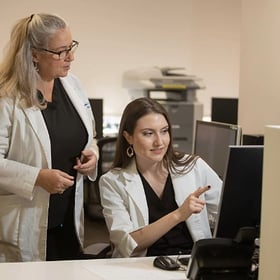 Dietitians operate at the intersection of medical decision-making, workflow coordination and patient experience. They see how nutrition orders intersect with physician treatment plans, nursing workflows, pharmacy timing, documentation processes and discharge coordination.
They are trained observers. They recognize subtle intake trends, screening gaps, delayed consults and variability in nutrition intervention timing. These patterns are not incidental. They carry clinical and operational implications.
When structured within a Team Science framework, these observations become focused questions and coordinated improvement initiatives.
When collaboration is intentional and outcomes are measured, clinical insight becomes a powerful driver of better care. See how this approach can support care delivery across your organization.
Across healthcare settings, dietitians are leading and contributing to interdisciplinary initiatives that influence outcomes central to clinical performance:
Individually, these efforts address local workflow variability. Collectively, they strengthen system reliability, support quality performance metrics and enhance patient outcomes.
As we continue to formalize and measure this work across sites, the scale of interdisciplinary initiatives led or co-led by dietitians is becoming increasingly visible. Structured problem-solving efforts are occurring consistently across hospitals, often quietly, yet with measurable impact.
Making this work transparent strengthens its sustainability and scalability.
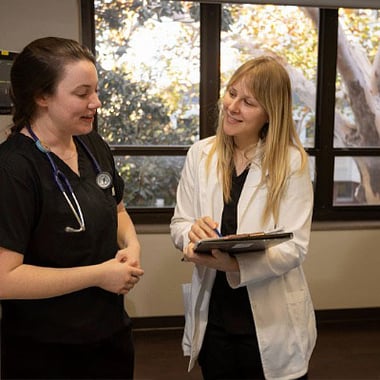 Team science does not redefine the role of the dietitian. It formalizes and elevates it within interdisciplinary care.
Dietitians partner with physicians to refine treatment strategies for patients at nutrition risk. They collaborate with nursing to improve screening reliability and workflow efficiency. They coordinate with pharmacy to align medical nutrition therapy with broader medical management plans. They work with informatics teams to strengthen documentation integrity and data capture.
These are not supportive tasks. They are clinical decisions that influence recovery timelines, quality metrics and system performance.
By structuring this work within a Team Science framework, we ensure that interdisciplinary collaboration is not informal or incidental, but measurable, reproducible and embedded within care delivery.
Healthcare is increasingly complex. The ability to identify patterns, align disciplines, measure outcomes and embed improvement into practice is foundational to high-performing systems.
Dietitians have long contributed to this work. Team Science ensures that contribution is intentional, disciplined and scalable.
When structured collaboration becomes standard practice, bedside insight evolves into system-level improvement. Through this model, dietitians continue to strengthen patient care through evidence-informed, interdisciplinary collaboration.


